In vitro fertilization (IVF) is a highly effective fertility treatment where eggs are removed from the ovaries and fertilized with sperm in a laboratory. Then, a resulting embryo is transferred to the uterus to establish a pregnancy. Each step of the IVF process is designed to optimize the chances of pregnancy success. At Regional Fertility Program (RFP), you can count on our experienced physicians to guide you through each step so you can undergo your IVF journey with confidence.
1. Preparation for an IVF Cycle
IVF is more time consuming and invasive than other fertility treatments like intrauterine insemination (IUI). Depending on your situation, you may need additional testing and personal lifestyle changes prior to starting an IVF cycle. We'll work with you closely to understand your needs and ensure you're prepared for treatment.
2. Ovarian Stimulation
Specific medications are used to increase the number of eggs produced in an IVF cycle and prevent premature ovulation to optimize pregnancy success.
3. Egg Retrieval
Egg retrieval is performed under conscious sedation, which means the patient is awake during the procedure, but discomfort is minimized. During the procedure, a physician inserts a vaginal ultrasound probe with an aspiration needle into the vagina. The needle is passed through the wall of the vagina to access each ovary, and the eggs are aspirated and drained into a test tube.
4. Insemination, Fertilization and Embryo Assessment
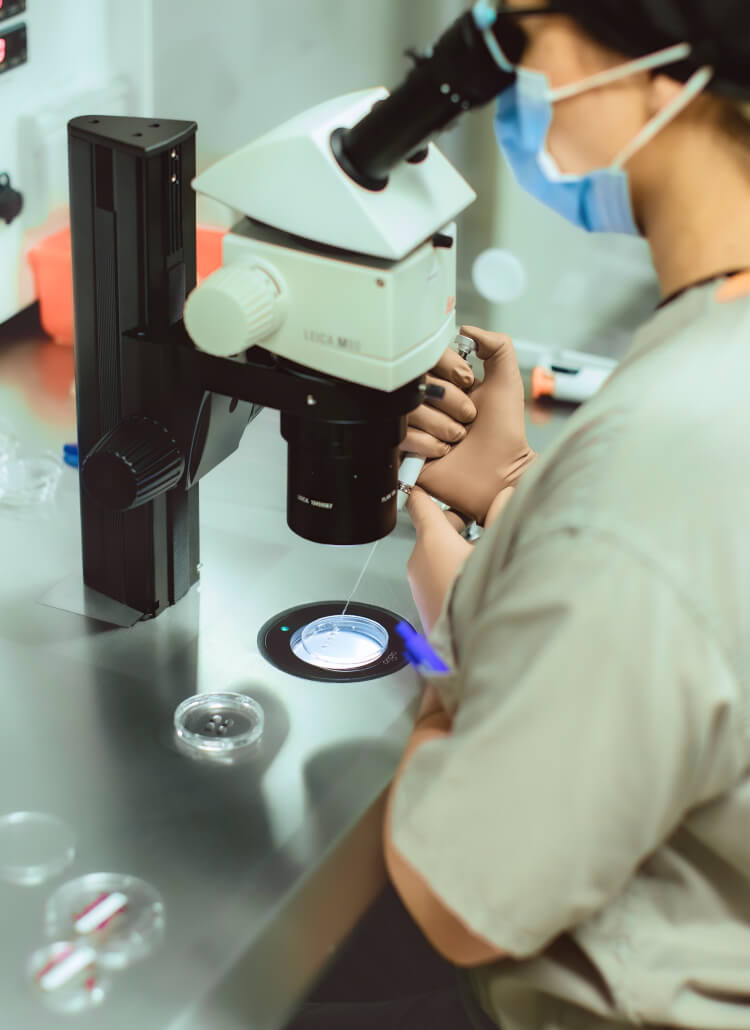
A semen sample is usually collected during the egg retrieval on-site or with specific instructions at home. Once we collect the eggs and sperm, we conduct either conventional insemination or ICSI (intracytoplasmic sperm injection) insemination. During conventional insemination, we place several thousand sperm with each egg in a Petri dish containing nutrient media. With ICSI, a single sperm is injected into each egg. Eggs are then incubated and assessed the following morning for fertilization. The morning following egg retrieval, the embryologist will determine the number and quality of fertilized eggs. By the fifth day after egg retrieval, a healthy embryo should become a blastocyst, which contains over 100 cells.
5. Embryo Transfer
Embryo transfer usually occurs on the fifth day following egg retrieval. The embryo transfer process doesn’t require sedation and is comparable to a pap smear. During the procedure, an embryo is loaded into a fine catheter which is passed through the cervix and into the uterus under ultrasound guidance. The physician applies gentle pressure to the catheter syringe and the embryo is released into the uterus, with the hope of achieving a successful pregnancy.
6. Luteal Phase Support and Early Pregnancy Follow-Up
Supplemental progesterone is provided to support the endometrial lining at the time of implantation and early pregnancy. If the pregnancy test is positive, progesterone will be continued into the first trimester of pregnancy.